
 Contact Us
 Request parts
 Request Service






POWER
WHEELCHAIRS
Power wheelchairs enhance the mobility and independence of people worldwide. Below are some easy guides to help you choose the right power wheelchair to meet your individual needs.


Unlock a
SPECIAL OFFER
today!
plus stay up to date on new
arrivals, special promotions,
and more
Thank you! You are on our list.

Sign up for texts and we'll send you
exclusive news, offers and more!
By submitting this form and signing up for texts, you consent to receive marketing text messages (e.g. promos, cart reminders) from NMN Spinco Inc at the number provided, including messages sent by autodialer. Consent is not a condition of purchase. Msg & data rates may apply. Msg frequency varies. Unsubscribe at any time by replying STOP or clicking the unsubscribe link (where available). Privacy Policy & Terms.
Sign up for texts
to Unlock a
SPECIAL OFFER
today!
plus stay up to date on new arrivals,
specials promotions and more
By submitting this form and signing up for texts, you consent to receive marketing text messages (e.g. promos, cart reminders) from NMN Spinco Inc at the number provided, including messages sent by autodialer. Consent is not a condition of purchase. Msg & data rates may apply. Msg frequency varies. Unsubscribe at any time by replying STOP or clicking the unsubscribe link (where available). Privacy Policy & Terms.

Check your texts
Reply "Y" to confirm your subscription
Didn't receive a text message?
Try texting START to 1-844-515-2807.
Sorry
There was an issue attempting to subscribe/re-subscribe you.
Try texting START to 1-844-515-2807.
You are already subscribed
Not receiving our texts?
Try texting START to 1-844-515-2807.




 1-800-850-0335
to learn about products & place an order
1-800-850-0335M-F 9am - 9pm ET
Sat 10am - 6pm ET
Sun 10am - 4pm ET
for existing order support
1-800-850-0335

M-F 9am - 6pm ET
Sat 10am - 6pm ET
Sun 10am - 4pm ET
for service on your product
1-800-850-0335
M-F 9am - 6pm ET

 0
Cart
0
Cart
M-F 9am - 9pm ET
Sat 10am - 6pm ET
Sun 10am - 4pm ET


Scooters
FROM $699

Power Wheelchairs
FROM $1299

Lift Chairs
FROM $699

Manual Wheelchairs
FROM $149

Beds
FROM $684

Cushions & Backs
FROM $55

Patient Lifts
FROM $510

Vehicle Lifts
FROM $785

Stair Lifts
FROM $400

Walking Aids
FROM $55

SpinKids
FROM $20

Ramps
FROM $44

Bath Safety
FROM $49

Pool Lifts
FROM $329

Standing Frames
FROM $3405
Choose from one of the product categories above or click the arrow below to view the full range.
 SHOW ALL
CATEGORIES
SHOW ALL
CATEGORIES 
PRODUCT EXPERTS
Assistive Technology Professionals and more

FREE SHIPPING
All orders over $50

DELIVERY AND SERVICE NETWORK
Helping hands in your area
Our customers come to us for a wealth of different reasons, but they can be summed in just one - The SpinLife Difference
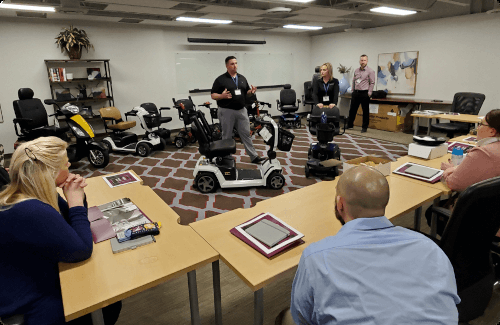

PRODUCT EXPERTS
Benefit from our experience

EXCLUSIVE PRODUCTS
The best deals on the best products

NATIONWIDE
SERVICE & DELIVERY

Browse the selection below to learn more.
Power wheelchairs enhance the mobility and independence of people worldwide. Below are some easy guides to help you choose the right power wheelchair to meet your individual needs.


Traditional wheelchairs are a simple cost effective option. The right size, fit, and weight of a wheelchair can significantly impact how useful and comfortable an individual chair can be. Check out the articles below for more details.


Mobility scooters are a great option for someone who needs help getting around. The articles below will review some of key topics you might consider when choosing a mobility scooter.





